Your Age and Fertility


It’s no secret that age affects your fertility. Women have a limited number of eggs, and they will eventually slow down and ultimately stop. Each woman’s body is different, making it hard to predict exactly how your fertility will change over time. However, there are some patterns that can make it easier for you to plan for your family.
Your 20s
In your 20s, barring any health problems, you are in your peak fertility. For most women, menstruation in their 20s is very regular. Of course, many women in their 20s are not ready to have a baby and choose to use contraceptives. If you are taking hormonal birth control, you will need to give your ovulation cycle time to reestablish its normal cycle.
30-35

✨ Trying to Conceive?
Our Ovulation & Fertility Bundle combines Myo-Inositol with essential vitamins to support healthy hormone balance and regular ovulation.
Shop Now — $55.00✓ Free shipping on orders over $40 | ✓ Trusted by millions of couples worldwide
In general, fertility begins to decline around age 30 to 32. At the age of 30, the average woman’s chance of conceiving in a month is about 20%
35
Around the age of 35, your fertility begins to decline more quickly. Women over the age of 35 are also more likely to have stillbirths, miscarriages, and other pregnancy complications. If you are ready to start a family, the best time to conceive is before the age of 35.
40 and older
By the age of 40, most women have a significantly harder time conceiving. Only about 40% of women who hope to get pregnant after 40 are able to do so. However, if you are over 40 and have decided to have a baby (or another baby), there is still hope. Advanced in fertility treatments and in vitro fertilization are making it increasingly possible for women over the age of 35 to have healthy babies.
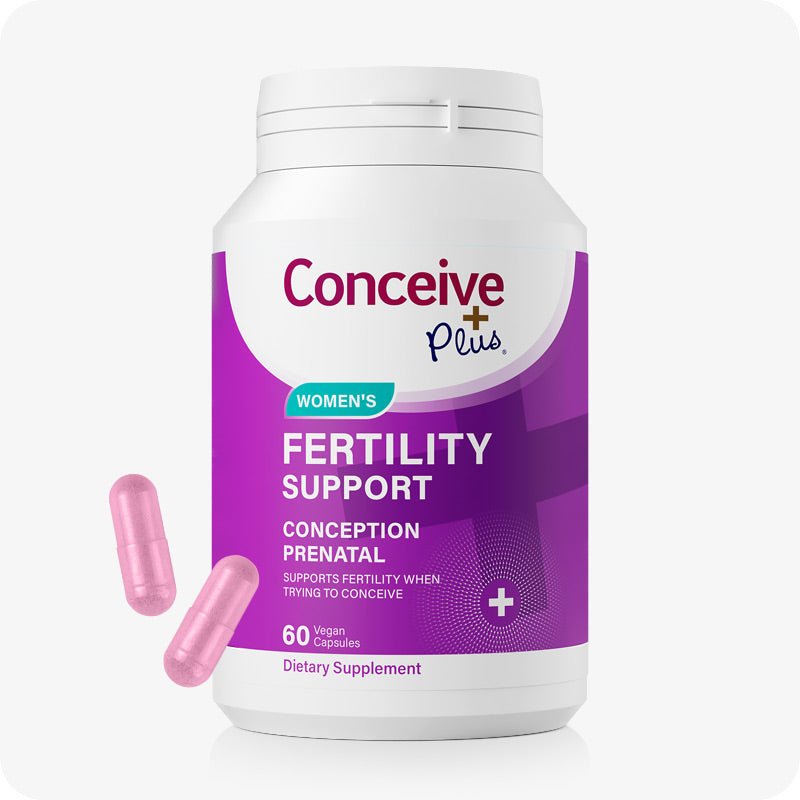
CONCEIVE PLUS®
Conceive Plus® products are available in pharmacies, drug stores, fertility clinics and even supermarkets in over 70 countries around the world helping millions of couples to get pregnant. Each day more and more trust our products to support their journey of starting or expanding their family.
🌱 Support Your Fertility Journey
Conceive Plus fertility supplements are clinically formulated to help regulate your cycle and support egg quality.
Shop Fertility Support →Frequently Asked Questions
Recommended by Fertility Experts
Conceive Plus Men's Fertility Support
Designed to support healthy sperm production, motility, and overall male reproductive health with clinically studied nutrients.
Shop Now →At what age does female fertility start to decline?
Fertility typically begins to decline around age 30 to 32, with the average woman's monthly conception chance dropping to about 20% by age 30. The decline becomes more noticeable after age 35, when the American Society for Reproductive Medicine (ASRM) recommends that women ready to conceive do so before this age to minimize pregnancy complications.
Can I still get pregnant after 40?
Yes, pregnancy is still possible after 40, though it becomes more challenging—only about 40% of women hoping to conceive after 40 succeed naturally. Advances in fertility treatments and in vitro fertilization (IVF) have significantly improved success rates for women over 40, making it increasingly viable to have healthy pregnancies with medical support.
How long does it take to get pregnant in your 20s versus 30s?
Women in their 20s are at peak fertility with regular ovulation cycles, making conception more likely to occur within a few months of trying. By age 30, the monthly conception rate drops to approximately 20%, meaning it may take longer to achieve pregnancy compared to your 20s, and this decline continues more rapidly after age 35.
Do I need to wait after stopping hormonal birth control to try to conceive?
Yes, if you've been using hormonal birth control, you should allow time for your ovulation cycle to reestablish its normal rhythm before trying to conceive. Most healthcare providers recommend waiting at least one menstrual cycle after stopping hormonal contraceptives to better track your fertility window and plan conception.
What are the pregnancy risks for women over 35?
Women over 35 have increased risks of miscarriage, stillbirth, and other pregnancy complications compared to younger women, according to ASRM guidelines. Prenatal testing and regular monitoring with a healthcare provider become especially important for women in this age group to ensure the best possible outcomes.
Does every woman's fertility decline at the same age?
No—each woman's body is different, making it difficult to predict exactly when and how individual fertility will change. While general patterns show fertility decline around age 30-32, factors like overall health, genetics, and reproductive history can affect the timeline differently for each person.
Are there fertility treatments available for women over 35?
Yes, advanced fertility treatments including in vitro fertilization (IVF) and other assisted reproductive technologies are widely available through American fertility clinics and have significantly improved success rates for women over 35. Many insurance plans now cover fertility treatments, though coverage varies by state and individual plan—it's worth checking with your provider about what's included.
Trusted by Couples in Over 70 Countries
Support Male Fertility From the Inside Out
Male fertility is just as important as female fertility in the conception journey. Conceive Plus Men's range delivers targeted nutritional support to promote healthy sperm and overall reproductive wellbeing.
Shop Men's Range →